Artificial intelligence has been creeping into almost every creative corner of the internet. A few years ago, it was mostly used for small experiments—generating strange images, remixing artwork, or helping people brainstorm ideas. Now it’s becoming part of how entire platforms operate.
Adult media hasn’t been immune to that shift. In fact, some niche communities adopted generative tools surprisingly quickly.
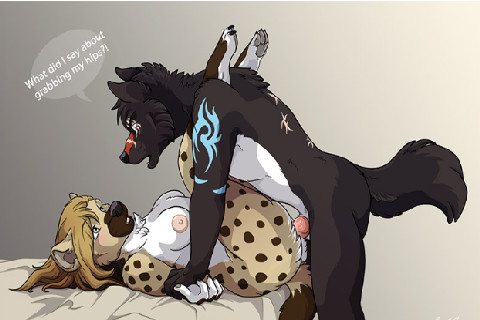
Furry art has always been digital at its core. The characters are imaginary. They’re stylized animals, hybrids, or fantasy creatures. Because of that, AI tools fit into the ecosystem more naturally than people might expect.
But once you introduce artificial intelligence into any creative space, the legal conversation changes almost immediately.
Old Laws Were Written for a Very Different Internet
Most regulations around adult content were created decades ago. Back then, the assumption was simple: adult media involved real performers.
There were actors, studios, contracts, and production teams. Cameras captured people. Websites hosted the finished videos.
AI disrupts that entire structure.
Instead of recording a performer, the software generates an image from scratch. The character might never have existed before the prompt was written. In communities exploring furry porn, the characters are fictional anyway, which means there’s no real-world identity involved.
That removes some of the legal concerns tied to consent or performer rights.
But it also introduces completely new ones.
The Ownership Problem
One of the strangest questions surrounding AI-generated art is ownership.
When an artist paints a picture, the answer is obvious—the artist owns it. But with generative systems, the process becomes murkier.
Imagine someone writes a prompt describing a character, and the AI produces an image. Who created that work?
Some argue it belongs to the user who wrote the prompt. Others say the credit belongs to the company that built the algorithm. A few legal experts have even suggested that purely AI-generated images might not qualify for copyright protection at all.
Courts and regulators are still debating the issue.
For communities that frequently remix artwork—something very common in furry fandom—this uncertainty can make things complicated.
Platforms Are Now Responsible for More Than Hosting
Another change involves the platforms themselves.
In the past, many websites simply hosted content created elsewhere. AI tools blur that line. If a platform provides the technology that generates images, it may also be responsible for how that technology is used.
That means moderation systems, prompt filters, and reporting tools are becoming essential parts of AI platforms.
Even in spaces focused on fictional art like furry porn, companies still need safeguards. Regulators increasingly expect technology providers to prevent misuse rather than react to it afterward.
Fictional Characters Change the Legal Debate
The fictional nature of furry art makes the legal discussion unusual.
Unlike traditional adult media, there are no actors involved. No contracts, no likeness rights, and no performer identities to protect.
Everything exists as a digital illustration.
Communities centered around furry porn often point to this fictional framework as one reason the genre has grown so freely online. The characters belong to imagination rather than reality.
Still, fictional content doesn’t automatically avoid regulation. Governments can still impose restrictions on distribution, labeling, or accessibility.
The conversation just shifts away from performer rights and toward technology.
Laws Don’t Look the Same Everywhere
Another complication is geography.
Adult content regulations vary dramatically depending on where a platform operates. Some countries enforce strict rules around distribution. Others focus mainly on age verification or platform accountability.
Artificial intelligence adds another layer to that puzzle.
A service available globally may need to comply with several different legal systems at once, which is not always easy when AI technology itself is still evolving.
The Legal Framework Is Still Catching Up
At the moment, the legal environment around AI-generated media is still taking shape.
Technology tends to move much faster than regulation, and lawmakers are only beginning to examine how generative systems work in practice.
Communities experimenting with AI art—whether it’s fan art, animation, or furry porn– are essentially exploring territory that lawmakers haven’t fully mapped yet.
For now, the technology keeps moving forward.
The legal system is slowly following behind.
And somewhere between those two timelines, new rules for digital creativity are gradually being written.
FOR Complain/Post Removal: SEND Message To Our Email [email protected]
Naijauncut will never contact you to demand money in order not to release your leak. Naijauncut does not work with anybody who will contact you. Naijauncut does not contact people (you will have to contact us for removal or complains).
The point of sharing this?
A lot of bad people are using nude pictures to scam innocent people especially women. If they lay their hands on your naked pictures/videos they can use it as a scam material to aid them in their bad adventures. When your nudes are uploaded here you can contact us for removal so far you have proof! ITS FREE.
Never send your nude photos/videos to any man no matter how you love him. Your nudes are not so cheap that money/relationship can pay for them. When the relationship ends, you will be under the power of whoever has your nudes. A word to a wise lady.
Naijauncut.com is not a producer of any or all of the content found on the website. All contents which includes videos and images are already available to the public or made available by the public.