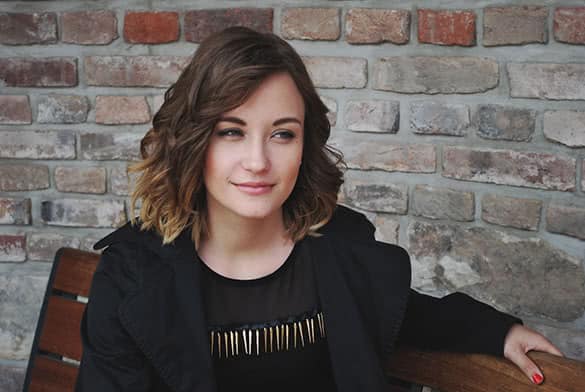
A picture lands in a group chat. Someone asks who the woman is. Nobody knows, but somebody thinks she looks familiar. The next person zooms in on her hand and announces that the image is AI. Another person points out that phone cameras mangle hands all the time.
By then, the picture has been forwarded twice.
We’ve become quick at arguing over whether an image looks real. That’s understandable. Looking is the part we can do immediately. Finding out where an image came from takes longer, and sometimes the answer isn’t available. But a convincing picture can be a photograph, a generated character or an edit built from somebody’s actual face. Those are different things for the person viewing it. They are very different things for anyone who might recognise themselves in it.
The old internet question was, “Who posted this?” Now there’s another one: “Was there ever a model?”
A body, a face and a story somebody added
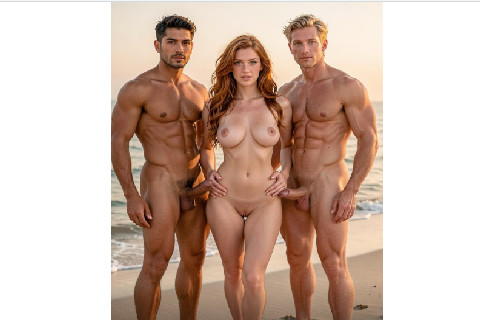
Imagine a full-body image against a plain wall. It might have started as a written prompt. It might have been made by editing a real photograph. Or it might be a photograph with enough retouching to look generated. The wall and the lighting won’t necessarily give the answer away.
Then a caption arrives: “Naija girl spotted online.” Suddenly the image has a supposed location and identity. Neither came from the pixels. A later repost adds a name. By the time it reaches another page, people may be discussing that name as though someone verified it.
This is why the caption matters as much as the image. A believable body can support a story that was attached after creation. Viewers see the two together and assume they belong together.
Compare that with a post plainly presented as a model photoshoot. Readers are being told they’re looking at photographs from a shoot. That description gives the images a context, though the page alone may not answer every question about who made or published them. If you remove the pictures from the page and send them elsewhere, even that limited context can disappear.
Generated pictures travel the same way. A person creates a fictional adult character, sends the image to a friend, and the next upload drops the word “fictional.” Someone recognises a resemblance to a real person, perhaps by chance. A comment turns resemblance into a claim. Each small addition makes the picture harder to understand.
There’s no reliable shortcut that lets a stranger recover its whole history by staring at an elbow.
What changed this year
In July 2026, WIRED reported on a Meta feature that allowed people to use public Instagram photos in AI image remixes. The important detail is in the update to its report: Meta withdrew the account-tagging feature three days after releasing it, following criticism.
The feature was short-lived. The question it raised is still here. A photo can be public enough to view and share while its owner has no desire to appear in somebody else’s generated image. Access to a face is different from permission to use that face in a new scene.
For an adult image, that difference is impossible to shrug off. The finished picture might never have existed as a photograph, yet the person whose features were used can still be recognised. Calling the result “AI” explains how it was made. It doesn’t tell us that the person agreed.
There’s another route, and it leaves far more room to play: invent an adult character. Start without a borrowed face. Decide how the person stands, what they wear, where they are and what mood the image should have. Those choices give a picture its pull. They’re usually more interesting than trying to make it resemble a stranger from a social feed.
Make the person in the picture belong to the picture
A body description alone often produces a forgettable image. Say “full-body portrait” and you’ve specified the framing, but hardly anything about the person. Why are they standing there? Are they posing for a formal portrait or turning toward somebody who has just spoken? Is the room bright enough to show every detail, or lit by a lamp across the room?
Those decisions change the image more than another round of adjectives about appearance.
Try describing an adult character waiting under a shop awning while rain hits the pavement. Give them an outfit chosen for the evening, a posture and an expression. If the first result feels generic, change one element. Move the camera farther back so the street becomes part of the scene. Alter the stance. Leave the features alone for a moment and see whether the picture develops a personality.
An AI body generator can be used to explore a fictional character’s full-body look this way. The point of making several versions is to find the one that fits the idea you had, or the one that surprises you with a better idea. You can be particular without making the character look like someone whose photos you found online.
Pay attention to the skin, light and setting together. A character under warm indoor light will look different from the same character outdoors at noon. If the image is meant to evoke Lagos nightlife, the setting should carry more of that work than a label saying “African” in a prompt. A place has light, signs, weather, clothes and movement. Generic scenery won’t suddenly become specific because the caption says where it is.
You might also find that the best result is the least polished one. A turned shoulder or a jacket sitting awkwardly can give a fictional person more presence than a pose designed to show every feature at once. Keep what interests you. You’re making an image, not filling in a specification sheet.
The trouble with the “AI tells”
People still inspect generated pictures for extra fingers, strange jewellery and mismatched shadows. Look closely if you want to; those details can give you a reason to ask questions. They aren’t a verdict.
Real photos get compressed, sharpened and edited. Generated pictures can get the fingers right. Sometimes the supposedly impossible detail is a reflection. Sometimes the giveaway is real, but the image has already circulated so widely that finding it changes very little.
If the picture is said to show a particular person, search for the earliest source you can find before repeating the name. Does that person claim the image? Does the original poster explain how it was made? Are other accounts attaching different names to the same picture? An unanswered question is still better than a confident mistake.
Creators can help by keeping an honest description with a generated image when they share it. “Fictional AI character” is short. It doesn’t ask viewers to admire the work any less. People have enjoyed invented bodies in drawings, films and games for years. The fact that this one can resemble a photograph makes its origin more useful to know.
And if you don’t know the origin of a picture someone sent you, you can leave the mystery where it is. You don’t have to solve it before deciding not to pass along a name.
FOR Complain/Post Removal: SEND Message To Our Email [email protected]
Naijauncut will never contact you to demand money in order not to release your leak. Naijauncut does not work with anybody who will contact you. Naijauncut does not contact people (you will have to contact us for removal or complains).
The point of sharing this?
A lot of bad people are using nude pictures to scam innocent people especially women. If they lay their hands on your naked pictures/videos they can use it as a scam material to aid them in their bad adventures. When your nudes are uploaded here you can contact us for removal so far you have proof! ITS FREE.
Never send your nude photos/videos to any man no matter how you love him. Your nudes are not so cheap that money/relationship can pay for them. When the relationship ends, you will be under the power of whoever has your nudes. A word to a wise lady.
Naijauncut.com is not a producer of any or all of the content found on the website. All contents which includes videos and images are already available to the public or made available by the public.